Red Sea diving beginnings, as recorded in the founder's later catalog.
Sandfish
Holothuria scabra
A catalog reference for discussion, not an identification of a current lot.
2017 catalog archive
Products / Sea cucumber
Sea cucumber · Bêche-de-mer · Teripang
Species. Texture. Preparation. Provenance. With sea cucumber, the details are the product.
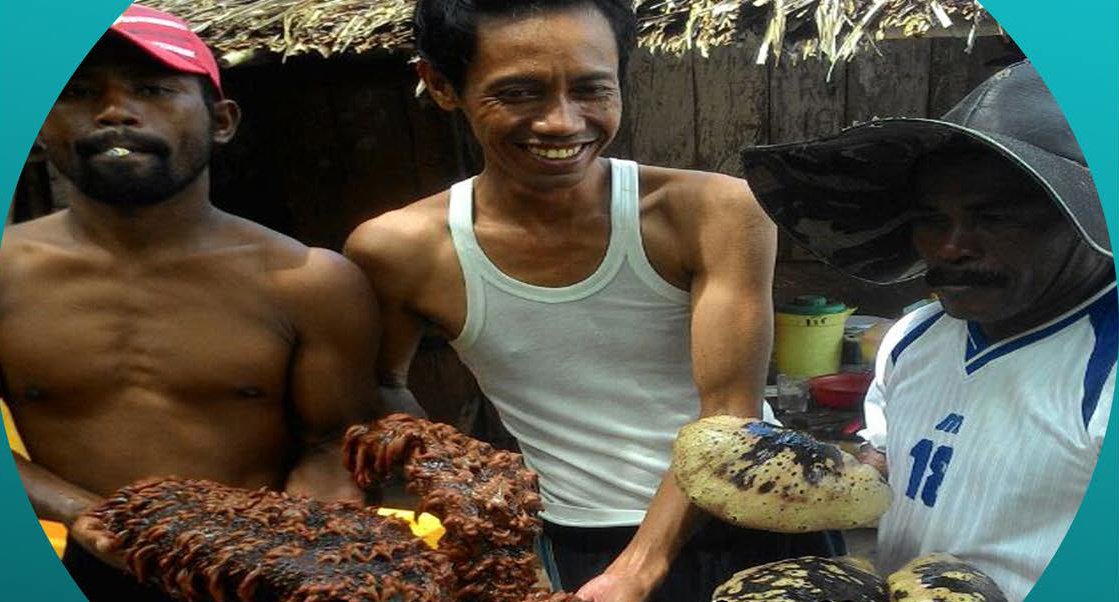
An archive with a human story
From diving to processing, a long-standing interest in the detail of sea cucumber.
Tarek Tharwat is a CMAS** Instructor. His 2017 Good Mood Enterprise catalog records his beginnings diving in the Red Sea in 1998, followed by work in Malaysia and Indonesia. Its photographs offer a window into that earlier chapter.
Here, the original product imagery becomes a starting point for a more precise conversation: what species, what preparation, and what your market actually needs.
This is a historical founder archive, not evidence of Ocean Pearl's incorporation date, uninterrupted supply, current inventory or present-day certification. Historical prices and former contact details are not reproduced.
Red Sea diving beginnings, as recorded in the founder's later catalog.
Good Mood Enterprise catalog: an original visual record of product forms and trade names.
Start each inquiry with a current lot, verified identity and a written specification.
The founder's collection
Sea cucumber is a group, not a single species. These price-free photographs come from the original 2017 catalog. Open each image to inspect the detail.
Showing 7 historical references.
Holothuria scabra
A catalog reference for discussion, not an identification of a current lot.
2017 catalog archiveHolothuria fuscogilva
Corrected spelling of the historical catalog label. CITES controls require attention.
2017 catalog archiveThelenota anax
Historical catalog label. The genus Thelenota is CITES-listed.
2017 catalog archiveActinopyga lecanora
A sea cucumber trade name here, not the venomous fish called stonefish.
2017 catalog archiveStichopus variegatus · historical label
Historical nomenclature retained as an archive label only. Obtain a current scientific identification.
2017 catalog archiveHolothuria lessoni
Historical catalog label. Check current CITES entries and their effective dates before trade.
2017 catalog archiveStichopus horrens · catalog label
A trade description from the archive; identification of the offered lot requires verification.
2017 catalog archiveCatalog names are historical labels, not taxonomic authentication of the photographs. Trade names can vary between markets. Dried-product appearance alone is not enough to establish species, origin or legality. Filters are navigation aids, not a complete regulatory classification.
From handling to finished form
Bêche-de-mer is the cooked and dried product. Species and processing method influence the result; a single recipe does not fit every sea cucumber.
Original processing footage · 47 seconds
A closer look at sea cucumbers being heated and stirred in large cooking pots. Supplied by the founder as part of the sea cucumber archive.
Silent viewing copy. This footage documents a processing scene, not a validated cooking procedure, current facility certification or proof of species. Location, vessel and capture date are not independently confirmed.
Video description: the camera moves between several metal pots over burners while a worker stirs the contents.
Keep species and lots distinguishable. Record origin, landing and handling information before processing.
Preparation and heat treatment need a process appropriate to the species and intended product, with hygienic controls.
Control drying and protect the finished product from moisture uptake, contamination and pests.
Assess the finished lot against the agreed identity, size, condition and analytical specification.
General technical context, not a validated processing instruction or a claim about a specific facility. The ACIAR/SPC processing manual is linked below.
Value beyond a trade name
“Premium” means little without a shared specification. Agree the measurement method, sample and acceptance criteria before comparing offers.
Moisture, salt, size distribution and preparation can change what a kilogram represents. Rehydration results also depend on the test method. Ask for measured, lot-specific evidence rather than a universal yield promise.
Current scientific identification, origin, landing area, lot code and chain-of-custody records. Resolve historical or local names before an offer.
Agree dried or another requested form; whole or cut; count per kilogram and size range at a defined product condition. Confirm availability separately.
Assess integrity, cut quality, surface condition, foreign matter and evidence of deterioration against an agreed sample.
Set buyer and destination requirements, sampling, test methods and reporting. No default percentage, shelf life or microbiological guarantee is implied.
Specify net weight, moisture protection, carton, labels, storage requirements, documentation and intended market.
Responsible trade starts with identity
Some sea cucumbers are listed under CITES, including white teatfish (Holothuria fuscogilva) and Thelenota species. A historical catalog entry is not permission to harvest, export or import.
Before any transaction, check the current CITES Appendices and effective dates, national harvest and export rules, any quotas or suspensions, and destination requirements. Establish which permits and supporting records apply to the exact species, origin and route.
Appendix II does not mean unrestricted trade or a blanket ban. The applicable permit process and lawful sourcing must be established for the proposed shipment. No permit, certification, sustainability claim or export eligibility is promised by this page.
Independent technical references explain the subject. They are not endorsements of Ocean Pearl Seafood.
Before we talk business
No current stock or availability is implied. The archive shows historical product references. Share your required species, form and destination so the proposed lot can be checked.
No. Processing can remove or alter useful identification features. Confirm the lot's scientific identity and supporting evidence rather than relying on a trade name or photograph alone.
No universal size, moisture, salt or rehydration yield is claimed here. Those details need an agreed sample, measurement method and lot-specific evidence.
The 2017 images belong to the founder's former-company catalog. They are historical material, not a representation of a current Ocean Pearl facility, audit or certification.
Start with a better brief
Select an archive reference or describe your target. We will use your brief to discuss identity, product form and the evidence needed for your market.
This tool prepares a message locally in your browser. It does not place an order, reserve stock or submit information to a server.